Takeaway is easy to sell and hard to measure. An online ordering system for restaurants should fix that, by taking the order on your own website, sending it to the right venue and showing which ad brought it in.
This article covers why takeaway orders go missing from your numbers, what to look for in an ordering setup, how delivery app fees compare with ordering direct, and what we have learned working with Enzo’s Cucina, which takes orders across 18 venues in Sydney and the Gold Coast.
Why takeaway orders go missing from your numbers
Ask most owners where last month’s takeaway orders came from and they will have to guess. Some came through a delivery app. Some came over the phone. Some came from a link on Instagram or Google. Each one lands in a different place, and none of them talk to each other.
That makes simple questions hard to answer. Did last week’s ad bring in any orders? Which venue is growing? Are your regulars ordering direct, or through an app that takes a cut of every order?
When those answers are missing, marketing decisions become guesses. You keep paying for the ads that look busy, not the ones that actually bring in orders.
What an online ordering system for restaurants should do
There are a lot of products on the market, and we are not going to rank them here. Search for the best online ordering system for restaurants and you will find plenty of lists. What matters more is whether your setup does these five jobs.
It takes the order on your website. Customers order from your site, under your brand, not from a screen full of your competitors.
It sends the order to the right venue. If you have more than one location, the customer picks their venue first, and the order goes straight to that kitchen.
It shows where the order came from. Every order should carry the ad, post or link that brought it in, so you can see which marketing pays for itself.
It keeps the customer’s details. A direct order gives you a name and a way to thank people and invite them back, if they have agreed to hear from you.
It is easy on a phone. Plenty of people order on their phone, often in a hurry. If it takes more than a few taps, they will go back to the app they already have.
A restaurant ordering system that does these five jobs gives you something a delivery app never will: your own numbers.
Uber Eats fees vs ordering direct
Delivery apps are useful. They bring in customers who might never have found you, and they handle the drivers. But they are not free. Uber Eats fees are charged to the restaurant on each order, and the Uber Eats commission depends on the plan you choose. Rates change, so check Uber Eats’ own pricing page for the current numbers before you do the maths.
The useful comparison isn’t app versus no app. It is which orders you are happy to pay commission on. A new customer who found you on an app may well be worth the fee. A regular who orders every Friday probably isn’t, because they already know where you are.
That is why many restaurants run both. The apps bring in new customers, and online ordering for restaurants on their own website gives regulars a direct way to order. A small card in every takeaway bag, or a line in your Instagram bio, pointing regulars to your own ordering page can be enough to start moving them across.
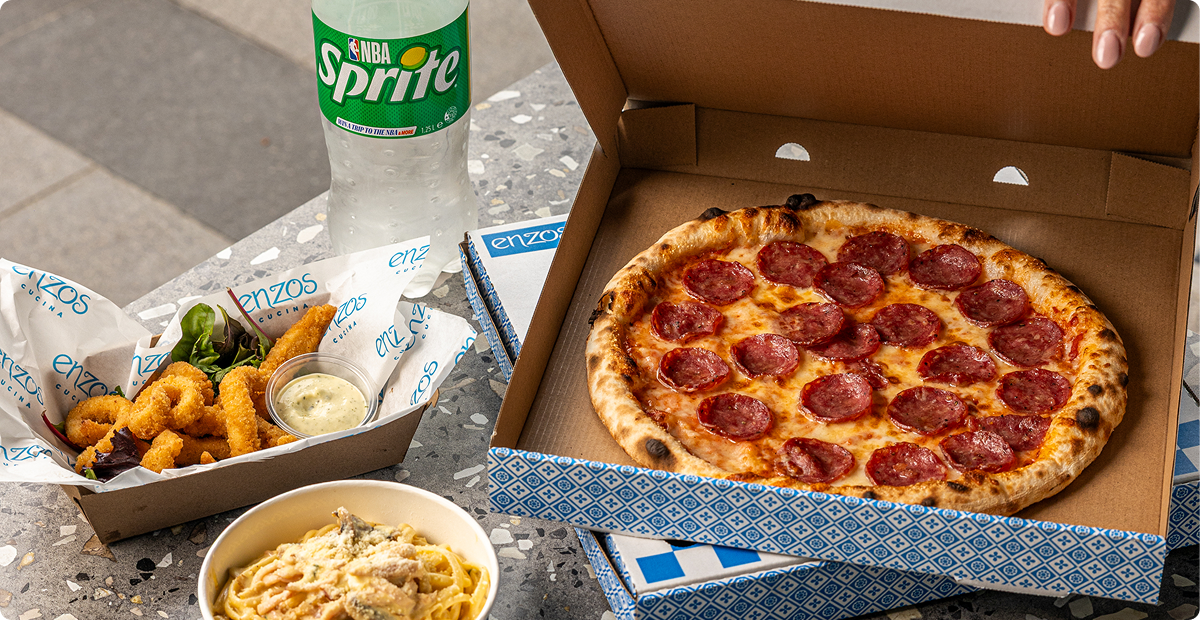
Photo description: A takeaway order from Enzo’s Cucina, placed through its online ordering system for restaurants.
How Enzo’s takes orders across 18 venues
Enzo’s Cucina has an Order Online button at the top of its website. It takes customers to a list of venues, so they choose their local Enzo’s first and then order from that venue’s own ordering page. The order goes to the kitchen that will cook it, not to a central inbox.
With 18 venues, that first step matters. A customer in Coomera and a customer in Penshurst are ordering from different kitchens, with different hours and different drivers. Picking the venue first keeps every order in the right place.
The lesson for a single restaurant is the same, just smaller. Make ordering direct the obvious choice on your own website. Keep each order tied to the kitchen that cooks it. And make sure you can see which marketing brought each order in, so next month’s budget goes to what worked.
For ways to fill the dining room too, read Restaurant event ideas that increase sales on quiet nights and Restaurant marketing ideas: why Enzo’s sells pizza classes.
The short version
- If orders come in from five places, you can't tell which marketing works.
- Take orders on your own website, send each one to the right venue, and record where it came from.
- Use delivery apps to find new customers, and give your regulars a direct way to order.
 Ahmed Damouni
SAV MEDIA GROUP - CEO